
How to Remove Hard Water Stains From Shower Glass (Even When It’s Etched)
Cloudy shower glass can be mineral deposits or etching, not just soap scum. Spotless X2 removes hard water stains and can take etching out on glass by hand; then SFX1 re-coats the clean door.
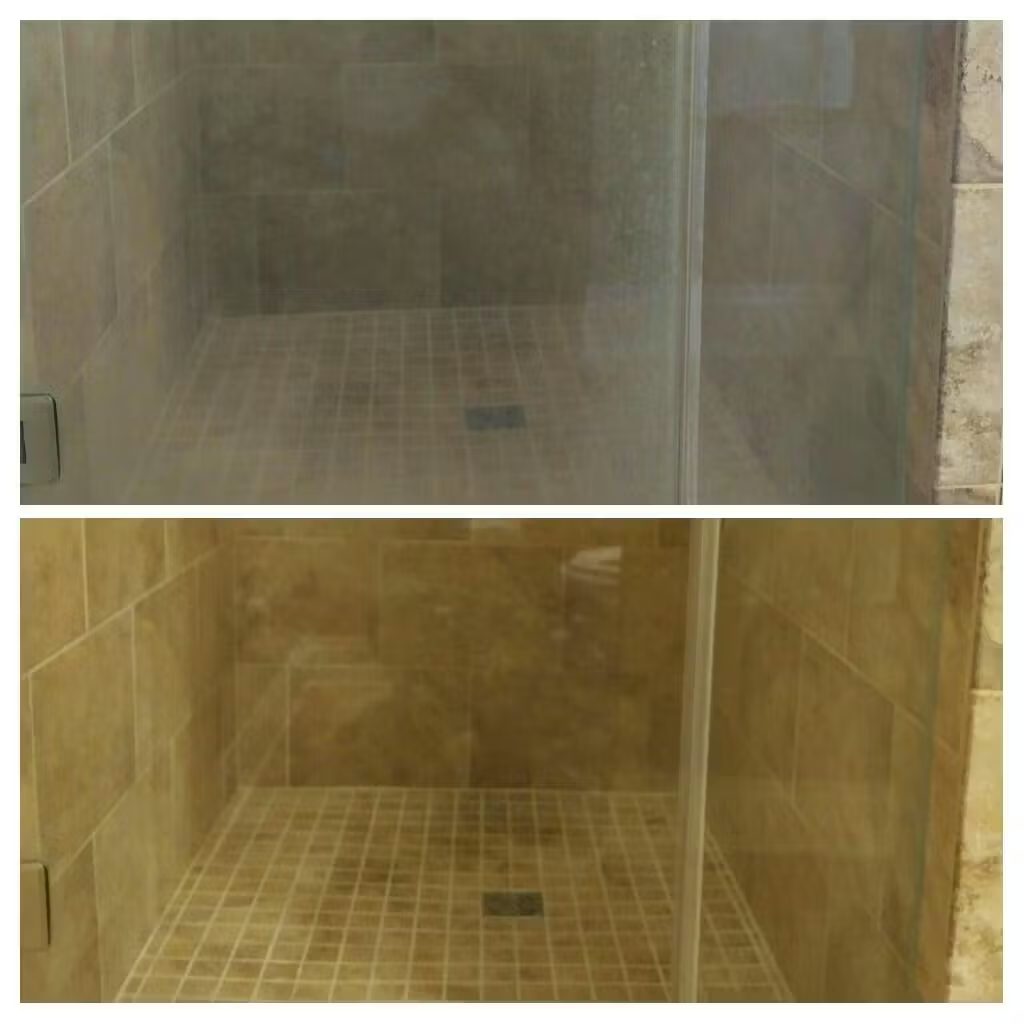
Start with the Glass + Protection bundle if you want removal and aftercare together. This guide explains the method. Customer shower before/after photos from the live photos page are included below; they show water-spot removal on shower glass and are not labeled as a diagnosed etched-glass lab test.
The short answer
- Light mineral film: use Spotless X2 on cool, slightly damp glass with a microfiber pad. Work it in, wipe damp, rinse and dry. No dwell or buffer is needed.
- Etched haze: Spotless X2 can take etching out on glass. Start with a small test area; do not assume every deep mark will disappear.
- Keep it clear: apply SFX1 after cleaning and squeegee after every shower.
Soap scum, hard water stains, or etching?
Quick check: Touch it and wipe it. Soap scum is a slick, waxy film of soap and body oils, and it smears when you wipe it. Hard water stains are chalky white spots, rings and drip lines that don’t smear and can feel rough. Often you have both: soap scum sitting on top of mineral marks.
| What you see and feel | Most likely | What to do |
|---|---|---|
| Slick, waxy film that smears | Soap scum | Spotless X2 takes it off along with any hard water |
| Chalky white spots, rings or drip lines that stay after washing | Hard water (mineral) stains | Spotless X2, then dry and coat with SFX1 |
| Smooth haze that looks the same wet or dry | Bonded deposits or etching | Spotless X2 (can take etching out on glass); test a small area first |
Clean in this order: You don’t need to wash the soap film off first. Spotless X2 takes soap scum and hard water off in one pass. Don’t layer products: rinse off one cleaner before you use the next. Use Spotless X2 on slightly damp glass, a quarter-sized amount on a microfiber pad, cross-hatch, no dwell, wipe, rinse and buff dry.
You can start by cleaning off loose dirt. You don’t need to wash soap residue off first: Spotless X2 takes soap scum and hard water off in one pass. A slick or waxy film points toward soap scum: soap and body oils can sit on top of the mineral marks. Chalky white spots, rings and drip lines point toward mineral deposits left as water dries. Etching is damage into the glass rather than just a layer sitting on it. More than one can be present.
Wet test: wet a small cloudy area and compare it with the surrounding dry glass. A mark that becomes less visible when wet is a clue, not proof that it is only a deposit. Haze that stays visible can be bonded deposits or etching. Wetting changes how glass looks, so it cannot diagnose the depth of damage by itself.
Fingernail check: on clean glass, gently feel a small mark without scraping. A raised or gritty ring suggests buildup above the surface; smooth haze may be etching, but is not a definitive diagnosis. Do not drag a nail or tool across paint. Start with a small test patch, rinse and dry before deciding what remains.
For more context, see water spots vs etching and how hard water spots can damage glass.
A bathroom spray can remove a greasy layer while leaving a cloudy outline underneath. That does not mean the door is ruined, and it does not prove the remaining mark is etched. Look at a small clean, dry test patch before treating the whole door. Keep the same viewing angle and lighting when you compare it.
Why vinegar and everyday sprays stop working
Vinegar can help with light mineral deposits. Everyday bathroom sprays may clear soap residue without shifting established mineral buildup. Neither a failed vinegar attempt nor a stubborn cloudy patch is a reliable diagnosis of permanent damage.
The useful distinction is cleaning a layer above the glass versus polishing a mark in the glass. Spotless X2 is a polishing remover with diamond micro-particles, not a non-abrasive spray. It can remove hard water stains and take etching out on glass by hand. Do not mix cleaning products; use the label and rinse away the previous cleaner before starting.
For a closer look at those two approaches, see Spotless X2 vs vinegar. A product that helped fresh scale may not give the same result on older marks. Judge your own test patch dry, not just while water is hiding the haze.
Vinegar leaves streaks on the shower glass? What’s going on and what to use
If your glass looks streaky or hazy after a vinegar wipe, it usually isn’t the vinegar “leaving” something new. Most of the time, a thin mineral film is still on the glass. Vinegar loosened part of it and moved the rest around, and it dried in lines as the door air-dried. More glass cleaner tends to make the same streaks look shiny, not gone.
A glass cleaner like Windex or Hope’s is great for fingerprints and soap smudges. It isn’t made to remove the mineral film underneath. That’s the job Spotless X2 is built for.
Fix the streaks in four steps:
- Rinse the vinegar off first. Don’t layer products. Rinse the door with clean water.
- Take the film off with Spotless X2. Slightly damp glass, a quarter-sized amount on a microfiber pad, cross-hatch with light pressure. No dwell needed. Wipe with a damp towel, rinse well.
- Dry it, don’t let it air-dry. Buff the glass dry with a clean, dry microfiber towel. Check it dry in the same light you saw the streaks in. Harder stains can take 2–3 passes.
- Coat it and squeegee. Apply SFX1 on the clean, dry glass, then squeegee after every shower so new water doesn’t dry into new spots and streaks.
Spotless X2 is also OK on acrylic and fiberglass shower panels and tubs, chrome, stainless and grout. Keep it off natural stone (marble, granite, travertine), including stone curbs and benches. Wear gloves and eye protection; see the safety section below.
| If you see… | Most likely | What to use |
|---|---|---|
| Smudges and fingerprints that wipe away | Surface grime | Any glass cleaner |
| Streaks or haze that come back after vinegar | Mineral film still on the glass | Spotless X2, then dry and coat with SFX1 |
| Haze that stays the same wet or dry | Bonded deposits or etching | Spotless X2 (can take etching out on glass); test a small area first |
How to remove hard water stains from a glass shower door with Spotless X2

What you need
Gather Spotless X2, a microfiber applicator pad, clean water, a damp towel and a clean dry towel. Have protective gloves and eye protection ready. Open a window or use the bathroom fan. SFX1 is for after the removal step, not a replacement for it.
Safety
The Spotless X2 Safety Data Sheet uses the signal word “Danger” and states “Causes severe skin burns and eye damage”. Wear protective gloves and eye protection, work with ventilation, and follow the label and SDS. Read the Spotless X2 SDS. SDS checked November 5, 2026 (HST).
Keep runoff off natural stone. If the shower has a marble, granite or travertine curb or bench, protect it before starting. Stop and wipe up accidental drips immediately. A surface-safety claim for glass does not mean the product is harmless to skin or eyes.
Step by step
- Prep: start with cool glass, out of direct sun. Rinse away loose dirt and grit. Test a small area first.
- Protect: keep Spotless X2 off paint and natural stone. Protect nearby stone curbs, benches and sills from drips and runoff.
- Dampen: slightly damp glass is preferred. Spotless X2 can go on dry glass, but damp works better.
- Apply: put a quarter-sized amount on a clean microfiber applicator pad. Work one small section in a cross-hatch pattern with light pressure.
- No dwell: work the product in rather than leaving it to soak. Wipe with a damp towel, rinse thoroughly, and dry with a clean towel.
- Check dry: harder stains can take 2–3 passes. Compare the small test area with the untreated glass before continuing.
- Protect afterward: once the glass is clean and dry, apply SFX1 following its label. Mist, spread evenly, then buff with a clean dry towel.
If the glass is etched
Spotless X2 can take etching out on glass. Work the test patch by hand, then rinse and dry so you can see the result. Harder stains can need 2–3 passes. More pressure is not the same as a better result, and we are not promising a fix for every deep or long-standing case.

Factory easy-clean coatings
Spotless X2 will take off a factory easy-clean coating. If you can see water spots, that coating is already gone or compromised. Spotless X2 revitalizes the glass; then apply SFX1 as the new protective coating.
If keeping the original coating is your priority, do not start polishing it. Check the door maker’s care instructions first. A patch test helps you decide whether to proceed, but it does not make Spotless X2 a coating-preserving cleaner.
Other bathroom surfaces
Tile, porcelain and grout
Spotless X2 is used on porcelain and tile, and it is safe on grout. Test a small area, then work with the pad, wipe damp and rinse. Natural stone tile is excluded, even if the surrounding grout is a supported surface. For a full walkthrough, see how to remove hard water stains from shower tile and grout. If spots are still showing after you installed a water softener, see hard water spots on shower glass after a water softener.
Chrome and stainless
Spotless X2 also works on chrome and is safe on stainless steel. On fixtures and frames, wipe and rinse after working the small area. Do not assume every decorative finish is chrome or stainless; check what you have and test first. For aluminum shower door frames and tracks, see how to remove hard water from an aluminum shower door frame and track.
Keep off natural stone
Do not use Spotless X2 on marble, granite, travertine or similar natural stone. This includes curbs, benches, walls and sills around a glass door. Keep the glass job separate from the stone-cleaning job.
After the spots are gone: SFX1 + a weekly routine
SFX1 ceramic protection lasts up to 12 months and needs no buffer. It has 540 reviews. Apply it to clean, dry glass: mist onto the surface or towel, spread evenly and buff with a clean dry towel. Reapply when water stops beading, following the label.
- Squeegee after every shower so water does not dry on the door.
- Once a week, check the lower edge and handle area for fresh haze.
- Spot-treat new buildup early rather than waiting for it to get heavy.
- After polishing an area again with Spotless X2, renew its protection.
Protection is aftercare, not a substitute for removing existing deposits. A coated door still needs drying and routine checks. For the two-bottle option, see the Glass + Protection bundle.
Cost and coverage
- Single 16 oz bottle: $39.99
$79.98. - Any 2 bottles, mix and match: $64.99. Choose Spotless X2 + SFX1 for glass and aftercare.
- Any 3 bottles or the Ultimate Bundle: $74.99. The Ultimate includes Spotless X2, Dissolve X2 and SFX1.
- Shipping: free on orders of $49.99 or more; $4.99 under $49.99. Read the shipping policy.
- 30-day money-back guarantee: the customer pays return shipping unless the item arrived damaged. Read the returns policy.
Spotless X2: 1,240 reviews · Dissolve X2: 850 reviews · SFX1: 540 reviews. Across Sud Factory: 4.96 stars from 10K+ reviews, 150,000+ customers and 500,000+ bottles shipped. Founded in 2019, based in Hawaii, and 100% made and shipped in the USA.
One 16 oz bottle of Spotless X2 does several shower doors. The number of passes and size of the job affect how much you use. Shop Spotless X2 or choose glass removal + protection.
FAQ
Why does vinegar leave streaks on my glass shower door?
Usually because a thin layer of hard water minerals is still on the glass. Vinegar loosens some of it and spreads the rest, and it dries in streaks. Removing that film with Spotless X2, rinsing, and drying the glass with a clean towel fixes it.
What’s the best shower cleaner when vinegar leaves streaks?
For mineral streaks and haze on glass, use a dedicated hard water remover like Spotless X2, not more glass cleaner. Apply it on slightly damp glass with a microfiber pad, wipe, rinse, and buff dry. Then coat with SFX1 and squeegee after showers so the glass dries with fewer spots and streaks.
Will glass cleaner fix vinegar streaks?
Glass cleaner removes smudges and soap residue, but it doesn’t remove the mineral film that usually causes streaks after vinegar. If the streaks come back once the glass dries, it’s minerals.
How do I remove hard water stains from shower glass?
If the door is already spotting, the factory easy-clean coating is gone or compromised. Use Spotless X2 on cool, slightly damp glass with a microfiber pad. Work a small section in a cross-hatch pattern, wipe damp, rinse and dry; harder stains may take 2-3 passes. Then apply SFX1. Spots left too long can turn into etching.
Why does my shower glass still look cloudy after cleaning?
Soap residue may be gone while mineral deposits or etching remain. Check a small clean, dry area rather than assuming the door is ruined. Water spots already mean the factory easy-clean coating is gone or compromised. If minerals remain, use Spotless X2 (it can also take etching out on glass), then recoat with SFX1.
What is the difference between soap scum, hard water stains and etching?
Hard water spots left too long can turn into etching. Soap scum is a waxy film of soap and oils, mineral stains are deposits left by dried water, and etching is damage into the glass. They can occur together.
How can I tell if it’s soap scum or hard water on my shower glass?
Soap scum is a slick, waxy film that smears when you wipe it. Hard water stains are chalky white spots, rings and drip lines that don’t smear. You can have both. You don’t need to wash the soap film off first: Spotless X2 takes soap scum and hard water off in one pass.
What do I use for soap scum and hard water spots on my shower glass?
Spotless X2 takes soap scum and hard water off in one pass. Apply it to slightly damp glass with a microfiber pad, work it in (no dwell), wipe, rinse and buff dry. Then coat with SFX1 and squeegee after showers so the glass dries with fewer spots and streaks.
Can etched hard water marks be removed from shower glass?
Spotless X2 can take etching out on glass by hand. Test a small area first; this is not a promise that every deep mark will disappear. Hard water spots left too long can turn into etching, which is why it is better to clean them sooner. Then apply SFX1.
How do I tell a deposit from etching?
Wet a small patch and gently feel clean glass for a raised ring. Raised deposits and smooth haze offer clues, but neither wetting nor touch alone proves etching.
What is the best hard water stain remover for glass shower doors?
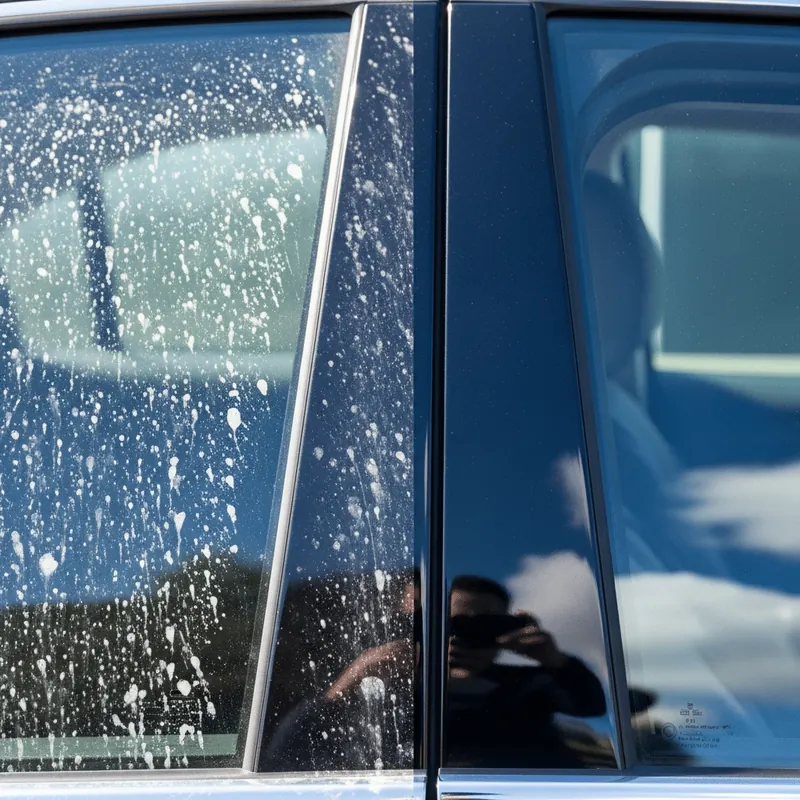
Hard water spots left too long can turn into etching. Hard water spots left longer on paint are more likely to work into the clear coat — spots that sit can sink in and stop wiping off. For the Sud Factory by-hand method, choose Spotless X2, a polishing remover for glass. It is not for paint or natural stone and will take off a factory easy-clean coating.
Is Spotless X2 safe on grout, chrome, tile and stainless fixtures?
It is safe on grout and stainless steel and is used on chrome, porcelain and tile. Test first, wipe and rinse, and do not use it on natural stone.
Will Spotless X2 remove a factory easy-clean coating?
Yes. Water spots mean the coating is gone or compromised; Spotless X2 takes it off, then SFX1 can be applied as the new protective coating. Leaving the spotted glass untreated will not bring the factory coating back.
How do I keep shower glass from spotting again?
Squeegee after every shower and apply SFX1 to clean, dry glass after removal. SFX1 lasts up to 12 months; reapply when water stops beading. If the door is already spotting, the factory easy-clean coating is gone or compromised — clean with Spotless X2 first, then recoat.
How much does one bottle cover and what does it cost?
One 16 oz bottle does several shower doors and costs $39.99, regularly $79.98. Any 2 bottles are $64.99 and any 3 or the Ultimate Bundle is $74.99; shipping is free at $49.99+ and $4.99 under.