If oncoming headlights turn into blinding starbursts, your windshield may be part of the problem.
- Film and spots on glass scatter light into halos and starbursts.
- Check both sides of the windshield.
- Remove outside spots with Spotless X2; wipe the inside film gently.
- If glare stays after cleaning, have the glass and your eyes checked.
Why glare is a night problem
During the day, light comes from everywhere, so a little haze on the glass is hard to notice. At night, light comes from a few very bright points: headlights and streetlights. Every bit of film or mineral on the glass scatters those points into halos.
The inside of the windshield matters too. The film that builds up there is invisible in daylight and suddenly obvious when an oncoming car crests a hill.
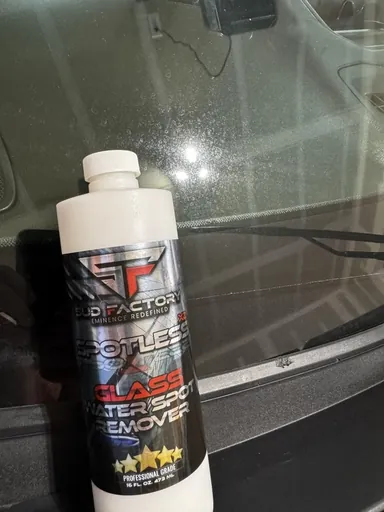
Why dirty glass increases glare
Film, haze and water spots on the glass scatter light instead of letting it pass straight through. In daylight you might barely notice; at night every headlight and streetlight gets a halo.
Check both sides
- Outside: hard water spots and mineral film from rain and washing.
- Inside: a hazy film builds up from the cabin over time and shows up mostly at night or driving into the sun.
How to clear it
For spots on the outside, use Spotless X2:
Spotless X2 is a strong acid cleaner: its Safety Data Sheet lists it as causing severe skin burns and eye damage. Wear gloves and eye protection, keep it off your skin, and read the label before you start. Every sheet is on our SDS page.
What you’ll need
- Spotless X2
- Microfiber applicator pad
- Glass towels (inside and outside)
- Gentle glass cleaner (inside)
- Nitrile gloves
- Eye protection
- Work on cool, dry glass in the shade. Start clean so you can see every spot.
- Use a quarter-sized dab of Spotless X2 on a microfiber applicator pad. A little covers a big area.
- Cross-hatch it over the spots, up and down then side to side. Heavy buildup may need a second pass.
- Wipe with a damp towel, then buff dry with a clean microfiber.
Inside, clean with a fresh microfiber and a glass cleaner, then buff dry with a second towel.
If glare stays bad after the glass is truly clean, get your eyes and your windshield checked. Pitting from years of road grit can also scatter light, and that needs a professional.
Small habits that help
Keep a dedicated glass towel in the car for the inside of the windshield. Avoid touching the glass with your hands, since skin oils smear. Make sure your own headlights are clean too: hazy headlights put less light on the road, which makes oncoming glare feel even worse.
Common mistakes to avoid
Only cleaning the outside. The inside film causes a lot of night glare.
Using one towel for both sides. You move film from one side to the other.
Touching the glass. Fingerprints smear under headlights.
Ignoring wiper streaks. They line up with oncoming lights.
A simple care schedule
| When | What to do |
|---|---|
| Weekly | Wipe the inside of the windshield. |
| Every wash | Clean and buff the outside glass. |
| Every few months | Spotless X2 for mineral film, then SFX1. |
Frequently asked questions
Why is glare worse at night?
Film and spots on the glass scatter the light from headlights and streetlights, creating halos and starbursts.
Is the haze on the inside or outside?
It can be both: water spots on the outside, and a film that builds up on the inside over time.
What if the glare doesn’t improve after cleaning?
Pitting from road grit can also scatter light, and that needs a glass professional. It is also worth getting your eyes checked.
Does the inside film come back?
Yes, it builds up over time. Wiping it weekly keeps it under control.
Can a water spot remover help with glare?
It removes mineral film on the outside of the glass, one of the common causes of scattered light.
See the road, not the glass
Spotless X2 takes the mineral film off your windshield.