Ask a detailing forum how to get stubborn water spots off a windshield and someone will say “just use a razor blade.” It’s not a crazy idea: glass is hard, and a fresh blade can shave off a lot of crusty buildup. But scraping has real risks and real limits. Here’s when a razor makes sense, when it doesn’t, and what to do instead.
- A new razor blade on wet, clean outside glass can lift raised buildup, but one grain of grit under it can leave a scratch.
- A blade can’t remove what’s bonded flat to the glass or etched into it. Faint outlines usually stay.
- Never scrape window tint, rear defroster lines, paint, plastic headlights or coated glass.
- An acid-based glass remover like Spotless X2 dissolves mineral spots instead of scraping them.
What a razor blade actually does to water spots
Hard water spots are minerals, mostly calcium and magnesium, left behind when water dries. Thick, crusty deposits stand up off the glass, and a sharp blade held low can shave the top of them off.
The catch is what’s left. The thin mineral layer that’s bonded flat to the glass is right where the blade glides over it, so a ghost of each spot often remains. And if the spots have sat long enough to etch the glass, no blade can fix that: the mark is in the glass, not on it. More pressure just adds scratch risk. See water spots vs. etching to tell which you have.
Razor blade vs. a glass water spot remover
| Razor blade | Spotless X2 | |
|---|---|---|
| How it works | Shaves raised buildup off the surface | Dissolves mineral deposits chemically |
| Thin, bonded mineral film | Often left behind as faint outlines | Made for it |
| Scratch risk | Real, if grit, a dull blade or a dry surface is involved | Non-abrasive, wiped on with a microfiber pad |
| Window tint, defroster lines | Never | Keep to outside glass and follow the label |
| Etching | Can’t fix it | Can’t fix it (needs polishing) |
| Best use | Stickers, paint overspray, thick crust on bare outside glass | Hard water spots, mineral film and haze on glass and chrome |
Where you should never use a razor blade
- Tinted windows. Aftermarket tint is a film on the inside of the glass, and a blade can slice or lift it.
- Rear defroster and antenna lines. The printed lines on the inside of many rear windows are easy to cut. See cleaning a rear window safely.
- Paint, trim and plastic headlights. A blade will scratch them, fast.
- Coated or treated glass. Scraping can wear away a rain repellent or glass coating. If your glass is coated, follow the coating maker’s advice.
- Dry glass. Always scrape on a wet, clean surface, never dry.
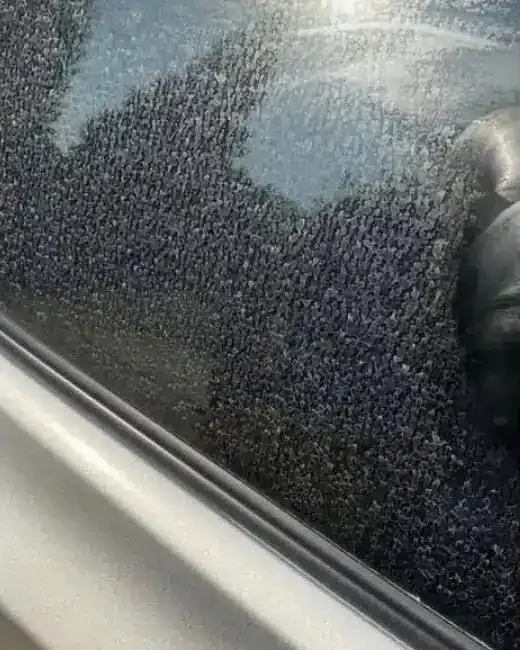 Before
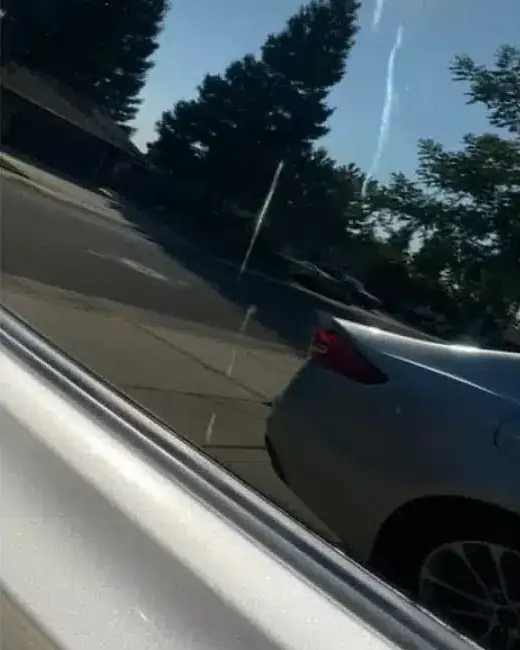 After
If you do scrape, do it carefully
For a sticker, paint overspray or thick crust on bare outside glass, a blade can be the right tool:
- Wash the glass first so no sand or grit is trapped under the blade.
- Use a brand-new single-edge blade in a holder. Throw it away at the first nick.
- Keep the glass soaking wet with soapy water or glass cleaner the whole time.
- Hold the blade low and push in one direction with light pressure. Don’t drag it back.
The safer fix: dissolve the spots
For most hard water spots, the minerals are the problem, so remove the minerals. Spotless X2 is our acid-based remover made for glass and hard surfaces: windshields, windows, mirrors and chrome. You work it in by hand, with no blade and no machine.
What you’ll need
- Spotless X2
- Microfiber applicator pad
- Two clean microfiber towels (one damp)
- Car wash soap and water
- Nitrile gloves
- Eye protection
Spotless X2 is a strong acid cleaner: its Safety Data Sheet lists it as causing severe skin burns and eye damage. Wear gloves and eye protection, keep it off your skin, and read the label before you start. Every sheet is on our SDS page.
- Work on cool, dry glass in the shade. Start clean so you can see every spot.
- Use a quarter-sized dab of Spotless X2 on a microfiber applicator pad. A little covers a big area.
- Cross-hatch it over the spots, up and down then side to side. Heavy buildup may need a second pass.
- Wipe with a damp towel, then buff dry with a clean microfiber.
Keep it off paint and wipe any drips right away. For spots on paint, use Dissolve X2. Never mix either one with other cleaners.
Once the glass is clean, protect it. A coat of SFX1 helps water bead and roll off, so fewer drops sit and dry into new spots.
New to water spots? Our Water Spot Removal Guide shows every spot type and the right fix for each, with a 30-second quiz.
Common mistakes to avoid
Scraping dirty glass. Trapped grit is what turns a blade into sandpaper.
Scraping harder at outlines that won’t go. That’s usually etching. More force only adds scratches.
Working on hot glass in the sun. Liquids dry too fast and leave new spots while you work.
A simple care schedule
| When | What to do |
|---|---|
| Every wash | Dry the glass fully, including mirrors and the cowl. |
| When spots show | Spot-treat with Spotless X2 while they’re fresh. |
| After a deep clean | Protect with SFX1. |
| Every few months | Re-protect when water stops beading. |
Frequently asked questions
Will a razor blade scratch car glass?
It can. A new blade on clean, wet glass usually glides, but grit, a dull or nicked blade, or a dry surface can scratch it. Always wash first and keep the glass wet.
Can a razor blade remove etched water spots?
No. Etching is damage in the glass itself. A blade only removes what sits on top. Light etching may be polished out; heavy etching may mean new glass.
Can I use a razor blade on tinted windows?
No. Tint is a film on the inside of the glass, and a blade can cut or lift it. Keep blades to bare outside glass.
What removes hard water spots from car windows without scraping?
An acid-based glass remover like Spotless X2. It dissolves the minerals, and you wipe it on and off with a microfiber pad.
Is a razor blade or Spotless X2 better for stickers?
For stickers and paint overspray on bare outside glass, a wet razor blade is often the right tool. For water spots and mineral film, a remover made for glass is the better pick.
Best windshield water spot remover · Can you use a magic eraser on your car? · Hard water spots on car windows
Dissolve it, don’t scrape it
Spotless X2 takes hard water spots off windshields, windows, mirrors and chrome.