Tinted windows show water spots just like clear glass. The trick is knowing which side of the glass you’re working on.
- Aftermarket tint film is usually on the inside of the glass.
- Water spots are almost always on the outside, on bare glass.
- Use Spotless X2 on the outside only.
- Treat tint film gently and follow your installer’s advice.
Why tinted windows look extra spotty
Dark glass makes white mineral spots stand out, the same way black paint shows every water mark. The spots aren’t worse on tinted windows; they’re just easier to see against the darker background.
Because the spots are on the outside and the film is on the inside, you can clean the spots normally without ever touching the tint.
Where the tint is
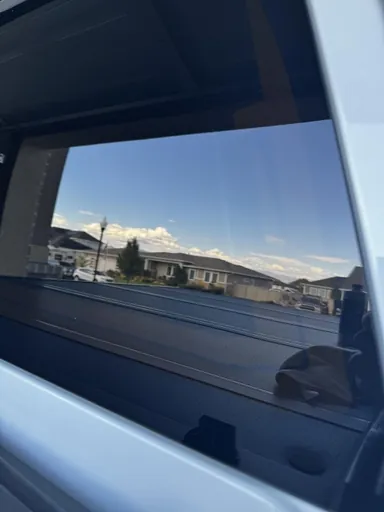
Aftermarket window tint is usually a film applied to the inside of the glass. Water spots from rain, sprinklers and washing are almost always on the outside, on bare glass.
Cleaning the outside
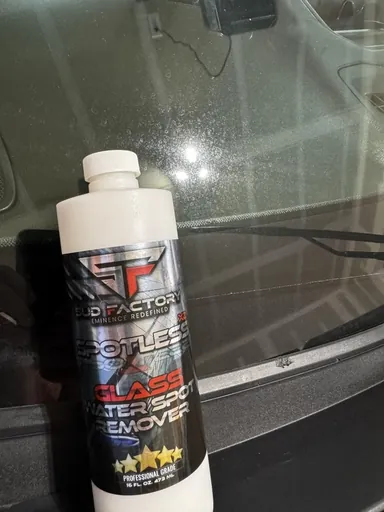
The outside of a tinted window is regular glass, so you treat it like any other: take the spots off with Spotless X2.
Spotless X2 is a strong acid cleaner: its Safety Data Sheet lists it as causing severe skin burns and eye damage. Wear gloves and eye protection, keep it off your skin, and read the label before you start. Every sheet is on our SDS page.
What you’ll need
- Spotless X2 (outside only)
- Microfiber applicator pad
- Soft microfiber towels
- Mild ammonia-free cleaner for film
- Nitrile gloves
- Eye protection
- Work on cool, dry glass in the shade. Start clean so you can see every spot.
- Use a quarter-sized dab of Spotless X2 on a microfiber applicator pad. A little covers a big area.
- Cross-hatch it over the spots, up and down then side to side. Heavy buildup may need a second pass.
- Wipe with a damp towel, then buff dry with a clean microfiber.
The inside: go gentle
- Don’t use spot removers, razors or anything abrasive on tint film.
- Follow your tint installer’s care instructions; many recommend a soft microfiber and a mild, ammonia-free cleaner.
- New tint needs time to cure before you clean it. Ask your installer how long.
Not sure if your tint is film or factory privacy glass? Factory tint is in the glass itself, so there is no film to worry about. When in doubt, ask the shop that tinted it.
Windshield without streaks · Hard water spots on car windows
Factory tint vs. film
Factory “privacy glass” is tinted during manufacturing, inside the glass itself, so there’s no film to protect. Aftermarket tint is a film applied to the inside surface. If you’re not sure which you have, look at the edge of the window: film often stops slightly short of the edge, and the shop that installed it can tell you for sure.
Common mistakes to avoid
Using a spot remover on the film. Keep it on the outside glass.
Razor blades on the inside. They can cut or lift the film.
Cleaning new tint too soon. Ask your installer how long to wait.
Rolling windows down wet. Dry the glass edges so water doesn’t drag into the seals.
A simple care schedule
| When | What to do |
|---|---|
| Every wash | Dry outside glass completely. |
| Weekly | Gentle wipe of the inside with a soft microfiber. |
| As needed | Spotless X2 on outside spots. |
Frequently asked questions
Which side of the window is the tint on?
Aftermarket tint film is usually applied to the inside of the glass. Factory privacy glass is tinted in the glass itself.
Can I use a water spot remover on tinted windows?
Use it on the outside, which is bare glass. Don’t use spot removers, razors or abrasives on tint film.
How should I clean the tint film?
Follow your installer’s care advice. Many recommend a soft microfiber and a mild, ammonia-free cleaner.
Can water spots damage tint film?
Water spots form on the outside glass, so they don’t touch inside film.
What should I clean tint film with?
Follow your installer’s advice; many recommend a soft microfiber and a mild, ammonia-free cleaner.