A stainless steel sink looks great on day one. A few months of hard water later, it’s cloudy, with chalky rings around the drain and white streaks where water dries. The good news: that film sits on top of the steel, and it comes off with the right cleaner and a soft cloth.
- The white haze and rings are hard water minerals (mostly calcium and magnesium) left behind when water dries.
- Minerals dissolve in acid. Vinegar handles light film; heavy, crusty buildup needs a stronger acid cleaner like Spotless X2, which lists stainless steel on its label.
- Skip steel wool, harsh scouring pads and bleach. Work with the grain of the steel and rinse well.
- The easiest fix is prevention: wipe the sink dry after the last use of the day.
What those white stains on stainless steel really are
Tap water carries dissolved minerals. When a splash or puddle dries in the sink, the water leaves and the minerals stay. One drop is invisible. Hundreds of drops, day after day, build a chalky film that dulls the shine and collects around the drain, the faucet base and the bottom of the bowl, where water sits longest.
If you live somewhere with hard water, or you’re on a well, it builds faster. Want the full story? Read what hard water is and why it leaves spots.
Why scrubbing harder usually backfires
Most sinks have a brushed finish: fine lines running in one direction. Rough pads and gritty powders rubbed against those lines leave scratches that catch light and look worse than the original stain. Steel wool is the classic mistake. It can leave tiny metal bits behind that rust and stain the sink.
Bleach is the other one to skip. Chlorine and stainless steel don’t get along, and bleach left sitting in a sink can mark the finish. Since mineral film needs an acid to break down anyway, bleach isn’t the right tool here.
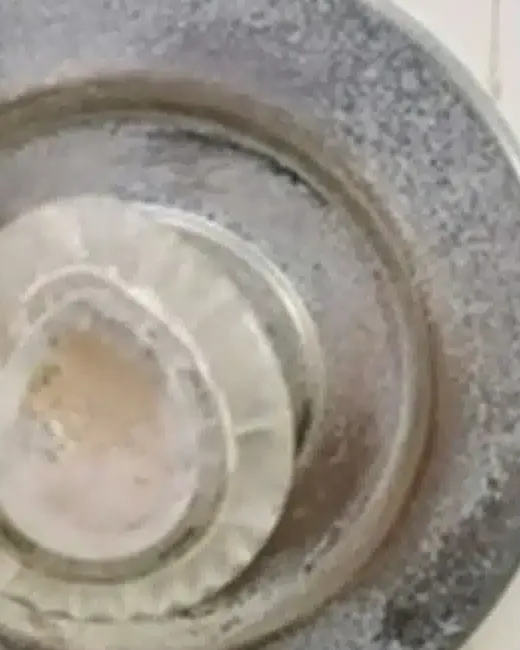 Before
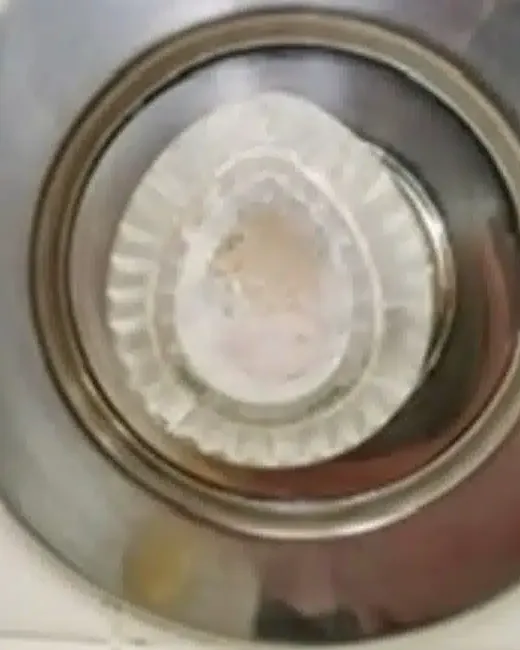 After
Vinegar vs. a hard water remover
To be fair to the kitchen cupboard: for a light, fresh haze, white vinegar on a cloth often does the job. It’s a mild acid, so it works on the same minerals, just slowly. The trouble starts with thick, crusty rings around the drain that have been building for months. That’s where people end up scrubbing.
| White vinegar | Spotless X2 | |
|---|---|---|
| How it works | Mild acid; needs time to soak | Strong acid cleaner; dissolves mineral buildup |
| Light, fresh haze | Often enough | Removes it |
| Thick rings and crust | Slow; may need repeat soaks | Heavy buildup may need a second pass |
| Label surfaces | General household use | Glass, chrome, stainless steel, aluminum, faucets, porcelain and tile |
| Safety | Mild; avoid eyes | Strong acid: gloves and eye protection |
Spotless X2 is made for hard surfaces only. Keep it off painted, coated or plastic parts around the sink, and never on car paint (that’s what Dissolve X2 is for).
How to remove hard water stains from a stainless steel sink
What you’ll need
- Spotless X2
- Microfiber applicator pad or soft cloth
- Two clean microfiber towels (one damp)
- Nitrile gloves
- Eye protection
- Good ventilation
Spotless X2 is a strong acid cleaner: its Safety Data Sheet lists it as causing severe skin burns and eye damage. Wear gloves and eye protection, keep it off your skin, and read the label before you start. Every sheet is on our SDS page.
- Empty and dry the sink. Clear out dishes, rinse away food bits, and towel it dry so you can see every ring.
- Use a quarter-sized dab of Spotless X2 on a microfiber pad. A little covers a big area.
- Work with the grain. Wipe in the same direction as the brushed lines, paying extra attention to the drain ring and faucet base. Heavy buildup may need a second pass.
- Rinse well with plenty of clean water so no cleaner is left on the steel or in the drain area.
- Buff dry with a clean microfiber towel, again with the grain, for an even shine.
Stainless appliances and some designer sinks have special finishes or clear coatings (fingerprint-resistant, black stainless, PVD colors). Follow the maker’s care instructions and test a small hidden spot first.
New to water spots? Our Water Spot Removal Guide shows every spot type and the right fix for each, with a 30-second quiz.
Common mistakes to avoid
Mixing cleaners. Never mix Spotless X2 with bleach, vinegar or any other cleaner. Use one, rinse it off fully, then switch if you need to.
Going in circles. Circular scrubbing on a brushed finish leaves swirl marks. Follow the grain.
Letting it air dry. Air drying is how the film started. Finish every clean with a towel.
Reaching for steel wool. It scratches, and the leftover metal bits can rust.
A simple care schedule
| When | What to do |
|---|---|
| Every evening | Rinse the sink and wipe it dry with a microfiber towel. Ten seconds stops most spots. |
| Weekly | Wash with warm water and a little dish soap, then dry. |
| When haze builds up | Clear it with Spotless X2 and rinse well, before rings turn into crust. |
Frequently asked questions
Can I use Spotless X2 on a stainless steel sink?
Yes. Stainless steel is on its list of hard surfaces, along with glass, chrome, aluminum, faucets, porcelain and tile. Rinse well afterward and test special finishes first.
Will vinegar damage stainless steel?
Plain white vinegar is a common way to clear light hard water film. Rinse it off and dry the sink afterward rather than leaving it to sit for hours.
Why does my stainless sink look cloudy even after cleaning?
Usually it’s leftover mineral film or soap residue that dried in place. Clean with the grain, rinse well and towel it dry.
Can I use bleach on a stainless steel sink?
It’s best avoided. Bleach can mark stainless steel if it sits, and it doesn’t remove mineral deposits anyway.
How do I stop hard water stains from coming back?
Dry the sink at the end of the day. In very hard water areas, a water softener or filter cuts down the minerals at the source.
Hard water on faucets and fixtures · Hard water stains on porcelain sinks · Mineral buildup on a shower head
Bring the shine back to your sink
Spotless X2 removes hard water buildup from stainless steel, chrome, glass, porcelain and tile.