
Water Spots on Your Car After Rain: Why They Happen and How to Remove Them
You parked outside. It rained. Then the sun came out. Now the hood, roof, or windshield has rings or dusty outlines. Rainwater is usually low in minerals when it falls, so the spots are not “hard rain.” They come from what the rain picks up and leaves behind when the drops dry.
The short answer
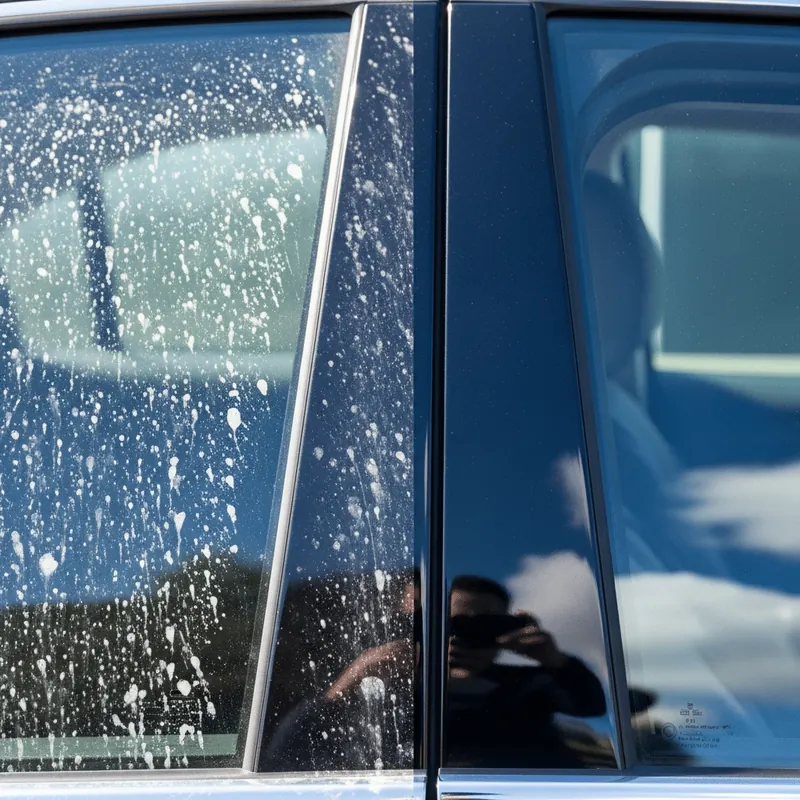
Does rain leave water spots? Yes, but usually not because rain is hard water. Rain starts low in minerals. Spots form when it picks up dust, pollen and pollution from the air, mixes with dirt already on the car, or runs off roofs and trees. When the drops dry, especially in sun, that residue stays behind as rings.
How to tell what you have: Wash the panel. If the spots are gone, it was surface dirt. Raised white rings can suggest mineral deposits, but appearance alone is not conclusive; test a surface-appropriate remover. If a ring stays after a remover and looks sunk into the clear coat, it may be etching; assess the paint before considering polishing.
Removing rain spots: On paint, use Dissolve X2 on a cool, washed panel in the shade. Test a spot first, let it work about 30 seconds and don’t let it dry. On outside, untinted glass, use Spotless X2 on damp glass with no dwell, 2–3 passes for harder stains.
Is rainwater hard water? (Usually not)
Rain starts with very little dissolved mineral content compared with well water or municipal hard water. That does not mean a dry car after a shower will look clean. On the way down, and while it sits on the car, rain collects airborne dust, pollen and pollution. It also mixes with whatever was already on the paint or glass. When those drops evaporate, especially under sun, the leftover solids form the rings people call rain spots.
We are not quoting rainfall chemistry numbers here. The useful point for a driver is simpler: treat rain spots as residue left behind by dirty water, not as proof that the rain itself was hard water.
Where rain spots really come from
Illustration · where rain spots come from
- Air picks up dust, pollen and pollution into falling drops
- Dirt already on the car turns into muddy outlines
- Runoff from roofs, trees, gutters and trim leaves streak patterns below edges
- Minerals left from earlier washes or sprinklers get rewetted and dry again
Airborne dust, pollen and pollution
Rain falls through air that already holds fine particles. Those particles hitch a ride in the drops. When the water dries on a horizontal panel, they stay as a thin outline or dusty film. Short showers followed by sun leave this pattern often, because there is less runoff to rinse the panel before evaporation starts.
A dirty car plus rain = muddy outlines
If the car already had road film, pollen or dust on it, rain turns that dirt into muddy water. As the muddy water dries, it leaves darker rings and streaks. A rinse or quick wash often clears these. That is why the first check after rain is a wash, not a remover.
Runoff from roofs, trees, gutters and trim
Spots that form in runs below a roof edge, tree overhang, gutter, spoiler or trim line are often dirty runoff, not random rain. The water picks up debris and minerals from those surfaces, then drips onto the panel below. For dirt-heavy stains, see also our guide on getting red dirt stains off a car.
Minerals already on the panel get rewetted
Minerals left from earlier washes or sprinkler overspray can sit quietly until rain rewets them. The new wet-dry cycle can make old rings look fresh. For sprinkler-specific spotting, see sprinkler spots on car paint. This page stays focused on rain.
Check what kind of spots you may have
Work on a cool panel in the shade.
- Rinse or do a quick wash. If the spots are gone, it was surface dirt.
- Still there after washing, and the ring looks raised or white: possible mineral deposit. Appearance alone is not a definitive diagnosis. Test a remover made for that surface.
- Still there after a remover, or the ring looks sunk into the clear coat: possible etching. Read water spots vs etching before you polish.
| Looks like | Feels like / behaves like | Fix |
|---|---|---|
| Dusty outline or muddy ring that rinses off | Soft film; gone after wash | Wash and dry. No remover needed. |
| Raised or chalky white ring after washing | Still visible dry; may lift with a surface remover | Test Dissolve X2 on paint or Spotless X2 on outside untinted glass. |
| Dull ring that remains after remover | Looks sunk into clear coat | Possible etching. Stop chemical escalation. Assess before polishing. |
How to remove rain spots from paint (Dissolve X2)

Wash first. Work a cool panel in the shade. Read the how-to-use instructions before you start.
- Test a small spot first.
- Apply Dissolve X2 as directed. Let it work about 30 seconds.
- Do not let it dry.
- Wipe or rinse as directed.
- Make a second short pass if needed.
Dissolve X2 is non-abrasive and made for paint. Keep it off glass. For paint-focused product choice, see best water spot remover for car paint. Product page: Dissolve X2.

How to remove rain spots from glass (Spotless X2)

Use Spotless X2 on the outside of untinted glass only. Damp glass is preferred. There is no dwell time. Work it in. Spotless X2 uses diamond micro-particles. Harder stains often need 2–3 passes. An optional polisher tip for Spotless on glass only is medium speed with a white pad. Hand application does not require a buffer.
Never put Spotless X2 on tint film, paint, natural stone or wood. For windshield-focused guidance, see best water spot remover for windshields. Product page: Spotless X2.
Related: how to clean a rear window without damaging defroster lines (sibling page; publish together).
When it’s etching (acid rain marks)
People often say “acid rain” when a ring will not wash off. Chemical removers do not level etched clear coat. If a ring remains after a directed remover pass and looks sunk into the finish, stop. Assess the paint. Polishing or a professional detailer may be needed. See water spots vs etching. We are not claiming that rain is acidic enough to etch on any set timeline, and we are not quoting hardness or pH numbers.
After it rains: what to do next time
- If you can, rinse dirty rain residue off before the sun bakes it.
- Dry horizontal panels (hood, roof, trunk) so beads do not sit and evaporate.
- Park away from drip lines under trees, roofs and gutters when you have a choice.
For the full after-wash prevention checklist, drying methods and DI rinse notes, use how to prevent water spots after washing your car. This page does not rebuild that checklist.
Does SFX1 help with rain spots?

SFX1 is protection after cleaning. It helps water bead and sheet off. It does not make the car spot-proof. Apply it after the surface is clean, following its directions. Ceramic-coated cars can still collect rain residue; see how to remove water spots from a ceramic coated car.
FAQ
Does rain leave water spots?
Yes. Rain usually starts low in minerals, but it picks up dust, pollen, pollution and dirt from the car or from runoff. When those drops dry, rings stay behind.
Should I wash my car after rain?
If you see muddy outlines or dusty rings, a rinse or wash is the right first step. Many rain marks are surface dirt and come off without a remover.
Is acid rain damage real?
Some marks that will not wash off are etching in the clear coat. Removers do not level etched clear coat. Assess before polishing.
Why are spots only on the hood and roof?
Horizontal panels hold drops longer. They also catch more airborne fallout and more drip from trees or roofs. Vertical panels shed water faster.
Will spots wash off?
Sometimes. Wash first. If they remain, test a surface-appropriate remover. If they still remain and look sunk in, you may be looking at etching.
Do coated cars still get rain spots?
Yes. Coatings help water bead and sheet, but they do not make a car spot-proof.
What to buy
Dissolve X2 is for paint (850 reviews). Non-abrasive. About 30 seconds dwell. Do not let it dry. Test a spot first. Spotless X2 is for outside untinted glass (1,240 reviews). Damp preferred. No dwell. 2–3 passes for harder stains. SFX1 is protection after cleaning (540 reviews). Helps water bead and sheet. Not spot-proof.
Shipping is free on orders over $49.99 and $4.99 under that. Every order is covered by a 30-day money-back guarantee. Sud Factory was founded in Hawaii in 2019. See reviews and customer photos.
Also useful: best water spot remover for cars, water spots on a black car, clay bar vs water spot remover.