If your house runs on a well, you probably know the feeling: you wash the car, step back, and it’s covered in white rings, sometimes with an orange tint. Well water is often much harder than city water, so it leaves more behind when it dries. The spots come off, and a few changes to how you wash keep them from coming back.
- Well water is often hard and can carry iron, so it leaves heavier spots than most city water.
- Fresh spots may wipe off; bonded rings need a water spot remover: Dissolve X2 on paint, Spotless X2 on glass.
- The real fix is never letting well water air-dry on the car.
- Outlines that stay after a proper clean are likely etching and need polishing.
Why well water spots are so stubborn
All tap water carries dissolved minerals. When a drop dries, the water leaves and the minerals stay. Many private wells draw from groundwater that has picked up a lot of calcium and magnesium on its way through rock, so each drop leaves more residue than you’d get from a typical city supply. Some wells also carry iron, which is why the spots can look orange or rusty on white and silver cars.
Heat makes it worse. Wash in the sun, and the water flashes off before you can dry it, baking those minerals onto the paint and glass. If you want the science, read what hard water is and why it spots.
What kind of spots do you have?
| What you see | What it usually is | The fix |
|---|---|---|
| Light white dots after one wash | Fresh mineral spots | Rewash in the shade and dry right away |
| White rings that survive washing | Bonded mineral deposits | Dissolve X2 on paint, wheels and trim; Spotless X2 on glass |
| Orange or rusty dots and stains | Iron left by the water or the road | Dissolve X2 on paint (see orange rust spots) |
| Outlines still there after a proper clean | Etching | Polishing or paint correction |
Not sure which you have? Water spots vs. etching walks you through a quick test.
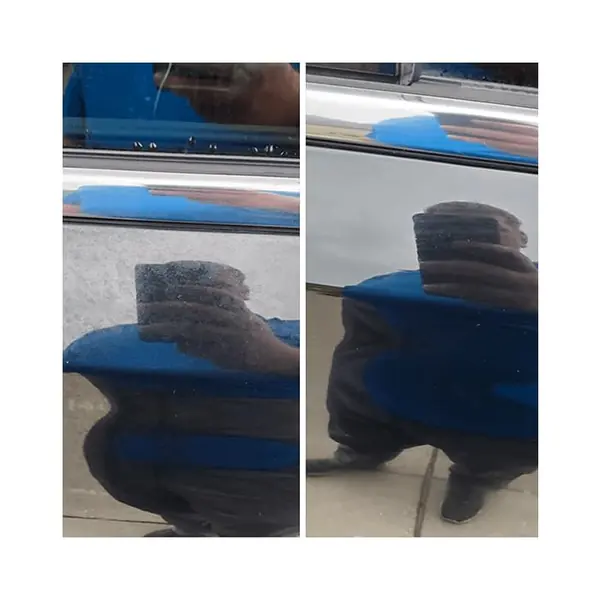
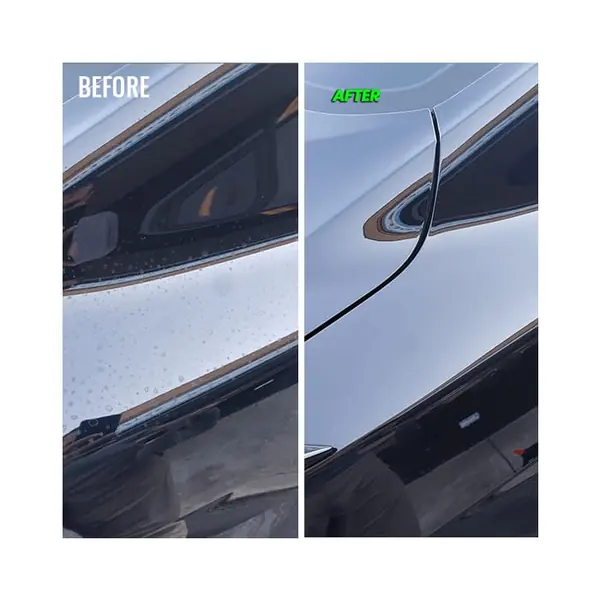
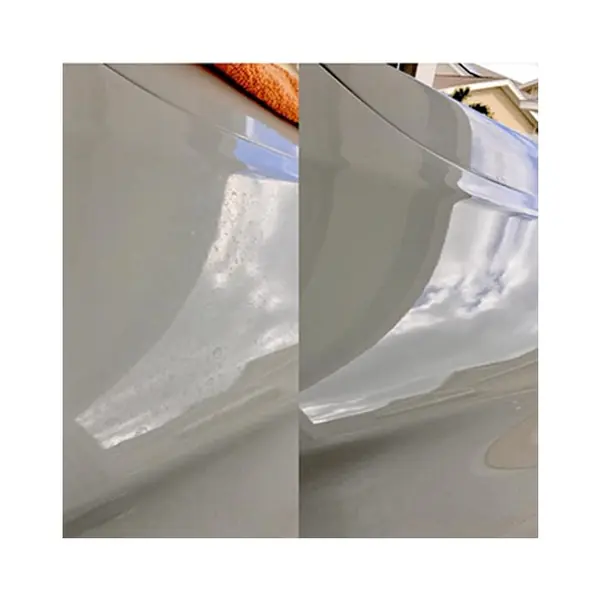
How to remove well water spots from paint
Wash first. If rings remain once it’s dry, they’re bonded. That’s the job Dissolve X2 is made for. It works on paint, clear coat, matte paint, vinyl wraps, wheels, chrome, and plastic and rubber trim.
What you’ll need
- Dissolve X2 for paint, wheels and trim
- Spotless X2 for glass
- Microfiber applicator or towel
- Clean, damp microfiber towels
- Nitrile gloves
- Eye protection
Spotless X2 and Dissolve X2 are strong acid cleaners: their Safety Data Sheets list them as causing severe skin burns and eye damage. Wear gloves and eye protection and read the labels before you start. Every sheet is on our SDS page.
- Wash and dry the area and work on a cool panel in the shade.
- Apply a small amount of Dissolve X2 to a microfiber applicator or towel.
- Work it over the stain. Older, heavier spots may need a second pass.
- Wipe clean with a clean, damp microfiber towel and check it in good light.
Don’t forget the glass
Glass often shows well water worse than paint does. Use Spotless X2 on windows, mirrors and chrome, not on paint. Put a quarter-sized dab on a microfiber pad, cross-hatch it over the spots, wipe with a damp towel and buff dry. For a full walkthrough, see hard water spots on car windows.
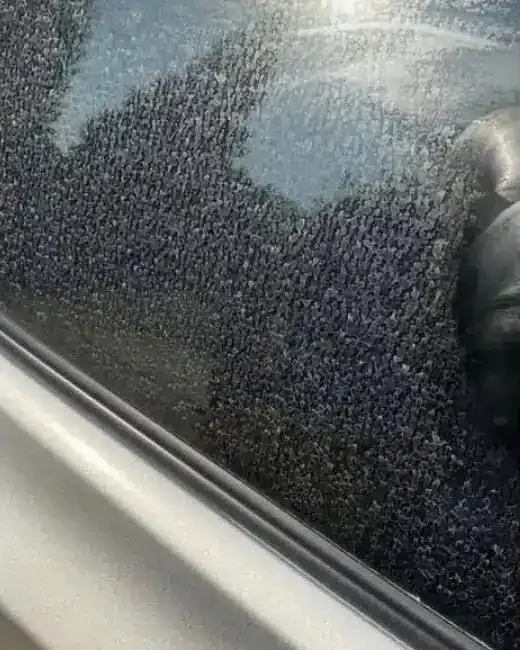 Before
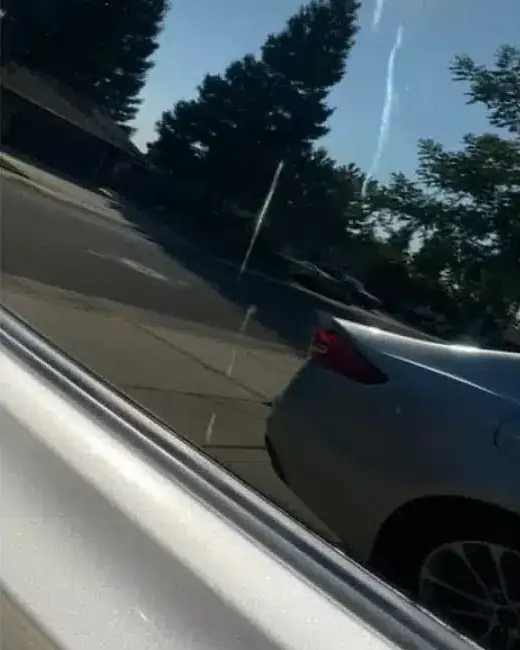 After
How to wash with well water without new spots
- Wash in the shade, on a cool car. Early morning or evening gives you time to dry before the water does.
- Work in sections. Wash and rinse one area at a time so water never sits long.
- Dry right away. A large drying towel or a car dryer/leaf blower beats any trick here. Get mirrors, door handles and trim gaps too.
- Try a soft final rinse. Some well owners do the last rinse with softened, filtered or deionized water. Less mineral in the rinse means less to dry onto the paint.
Protect the paint and glass once they’re clean. On SFX1-protected surfaces, water beads up and rolls off, so less of it is left behind to dry into spots. Mist it on a wet or dry panel and buff.
New to water spots? Our Water Spot Removal Guide shows every spot type and the right fix for each, with a 30-second quiz.
Common mistakes to avoid
Letting the car air-dry. With well water, that almost guarantees a fresh set of rings.
Washing in direct sun. Water and product dry too fast, and spots form while you work.
Using Spotless X2 on paint. It’s for glass and hard surfaces. Paint gets Dissolve X2.
Mixing cleaners to make them stronger. Never mix chemicals. Use one product, wipe it off, and rinse.
A simple care schedule
| When | What to do |
|---|---|
| Every wash | Wash in the shade and dry everything right away. |
| When rings appear | Remove them while they’re fresh with Dissolve X2 or Spotless X2. |
| After a deep clean | Protect paint and glass with SFX1. |
| Every few months | Re-protect when water stops beading. |
Frequently asked questions
Why does my well water leave white spots on my car?
Well water often carries more dissolved calcium and magnesium than city water. When it dries, those minerals stay behind as white spots and rings.
Why are some of the spots orange?
Some wells carry iron, and iron stains look orange or rusty, especially on white and silver paint. Dissolve X2 removes rust stains from paint.
Can I wash my car with well water at all?
Yes. Wash in the shade, work in sections and dry the car right away.
Will a water softener stop the spots?
A softener swaps hard minerals for others, so water can still spot if it air-dries. Drying the car is still the step that matters most.
What if the spots don’t come off?
If outlines remain after a proper clean with a remover, the surface is probably etched. Light etching on paint can usually be polished; see paint correction vs. spot removal.
Sprinkler water spots on cars · Prevent water spots after washing · Water spot types on paint
Made for bonded spots on paint
Dissolve X2 takes well water spots and mineral deposits off paint, wheels and trim by hand.