
Search for a home remedy for water spots and baking soda paste comes up fast. But hard water spots are minerals, and baking soda isn’t built to dissolve them. Here’s what it actually does on paint and glass, and what to reach for instead.
- Hard water spots are mostly calcium and magnesium minerals. Those dissolve in acids, and baking soda is a mild alkali, so it mostly scrubs instead of dissolving.
- Baking soda is a mild abrasive. Rubbed hard on glossy clear coat, especially dark paint, it can leave fine haze or swirls.
- For mineral spots, an acid-based remover does the work: Dissolve X2 for paint, Spotless X2 for glass.
- If outlines stay after a proper clean, that’s likely etching. Neither baking soda nor a spot remover fixes it.
What baking soda actually does
Baking soda (sodium bicarbonate) cleans in two ways. It’s mildly alkaline, which helps lift greasy and oily grime, and its fine grains act as a soft scrubber.
Water spots are a different kind of mess. When tap, sprinkler or well water dries on your car, it leaves its minerals behind as a white ring, and those break down in acid, not in an alkali. A baking soda paste can rub off the loosest, freshest spots, but it isn’t breaking the minerals down. Older or baked-on spots usually just stay put, and the temptation is to scrub harder.
Is baking soda safe on car paint?
Your paint’s shine comes from a thin, glossy clear coat. Anything abrasive can dull it. Light, wet, gentle use on a clean panel is low risk. Hard scrubbing on a dry or dirty panel is how people end up with fine scratches that show in the sun, most of all on black and other dark colors.
There’s also a downside on protected paint: an alkaline paste can weaken wax or sealant, so you may lose the beading you had. If your car has a ceramic coating, follow the coating maker’s care advice before using any home remedy or remover.
What about baking soda on car glass?
Glass is harder than clear coat, so it handles a baking soda paste better. The catch is the same: it’s scrubbing, not dissolving. Keep it off tinted film on the inside of windows and off the defroster lines on the rear window. For crusty hard water on windshields and windows, an acid-based glass remover like Spotless X2 gets to the minerals without the extra elbow grease.
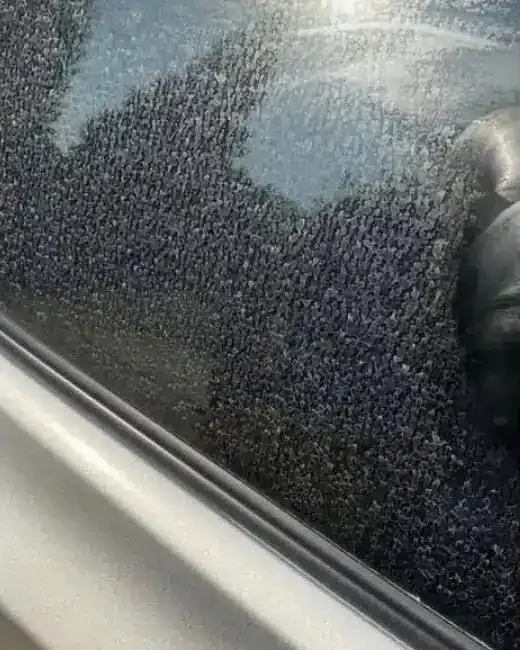 Before
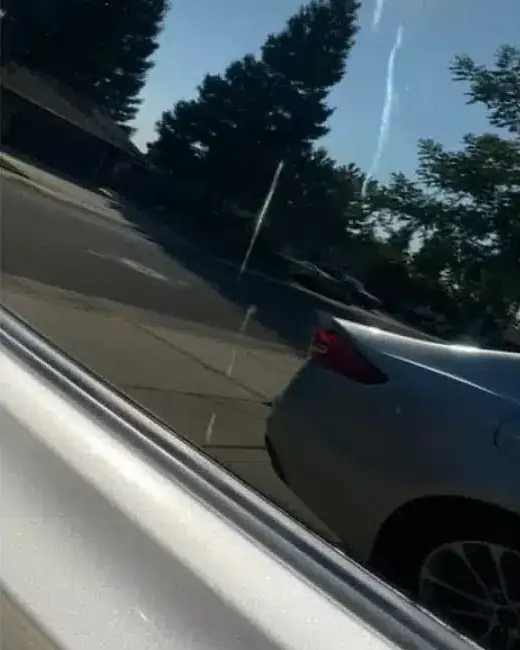 After
Baking soda vs. a water spot remover
| Baking soda paste | Dissolve X2 / Spotless X2 | |
|---|---|---|
| How it works | Mild alkali plus gentle scrubbing | Acid-based: dissolves mineral deposits |
| Fresh, light spots | Sometimes lifts them | Removes them |
| Older, baked-on spots | Usually stays put | Heavy buildup may need a second pass |
| Risk on glossy paint | Fine haze if you scrub hard | Use Dissolve X2 on paint, never Spotless X2 |
| Wax or sealant | Can weaken it | Re-protect after removing spots |
| Etching | Doesn’t fix it | Doesn’t fix it |
| Safety | Mild; avoid eyes | Strong acid: gloves and eye protection |
To be fair, baking soda is handy around the car: it’s great for deodorizing carpets. It just isn’t the right tool for mineral spots on glossy paint.
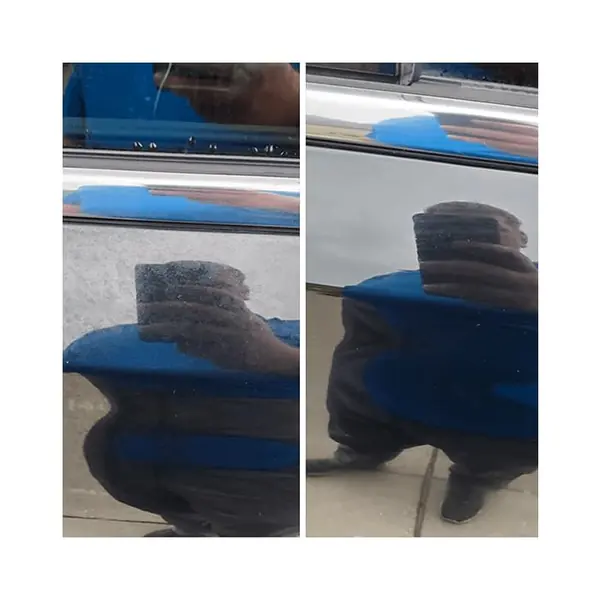
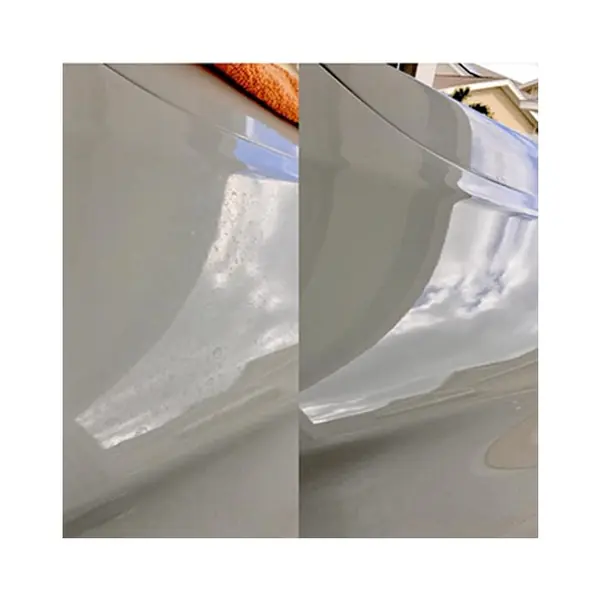
How to remove water spots from car paint with Dissolve X2
What you’ll need
- Dissolve X2 for paint (Spotless X2 for glass)
- Microfiber applicator or towel
- Two clean microfiber towels (one damp)
- Nitrile gloves
- Eye protection
- A shady spot and a cool panel
Spotless X2 and Dissolve X2 are strong acid cleaners: their Safety Data Sheets list them as causing severe skin burns and eye damage. Wear gloves and eye protection and read the labels before you start. Every sheet is on our SDS page.
- Wash and dry the area and work on a cool panel in the shade.
- Apply a small amount of Dissolve X2 to a microfiber applicator or towel.
- Work it over the stain. Older, heavier spots may need a second pass.
- Wipe clean with a clean, damp microfiber towel and check it in good light.
Once the spots are gone, protect the paint so the next round of water beads up and rolls off instead of drying in place. A ceramic spray like SFX1 mists on and wipes off in minutes.
New to water spots? Our Water Spot Removal Guide shows every spot type and the right fix for each, with a 30-second quiz.
Common mistakes to avoid
Mixing baking soda with vinegar. The fizz looks powerful, but the two cancel each other out. Never mix cleaners, including a home paste with Dissolve X2 or Spotless X2: use one, wipe it off fully, then switch.
Scrubbing a dry or dirty panel. Grit plus pressure is what scratches paint. Wash first and keep the surface wet.
Chasing etching. If the outline stays after a proper clean, more scrubbing only adds scratches.
A simple care schedule
| When | What to do |
|---|---|
| After every wash | Dry the car fully with a clean microfiber towel. See how to prevent water spots after washing. |
| When spots appear | Remove them early, before sun bakes them on. |
| Every few weeks | Top up protection with SFX1 so water rolls off. |
Frequently asked questions
Does baking soda remove water spots on a car?
It can lift some light, fresh spots by scrubbing, but it doesn’t dissolve hard water minerals, so older spots usually stay.
Can baking soda scratch car paint?
It’s a mild abrasive, so hard scrubbing can leave fine haze or swirls on glossy clear coat, especially on dark paint.
Is baking soda or vinegar better for water spots?
Vinegar is a mild acid, so it goes after minerals more directly, but it has its own limits. See vinegar vs. a water spot remover.
Can I use baking soda on my windshield?
Glass handles it better than paint, but keep it off tint film and defroster lines. Spotless X2 is made for windshields and windows.
What if the spots won’t come off at all?
That’s likely etching, which is damage in the surface itself. Removers take off deposits, not damage. See water spots vs. etching.
Vinegar vs. water spot remover on car paint · Can you use a Magic Eraser on your car? · Clay bar vs. water spot remover
Mineral spots off paint, without the scrubbing
Dissolve X2 removes water spots from paint, clear coat, wheels, chrome and trim.